
How to remove from Spokeo step by step
Removing yourself from Spokeo starts with one non-negotiable step: you need the exact URL of each listing, not just your name. Go to spokeo.com, search your full name plus city and state, then open every result that matches you and copy each profile URL from your browser's address bar.
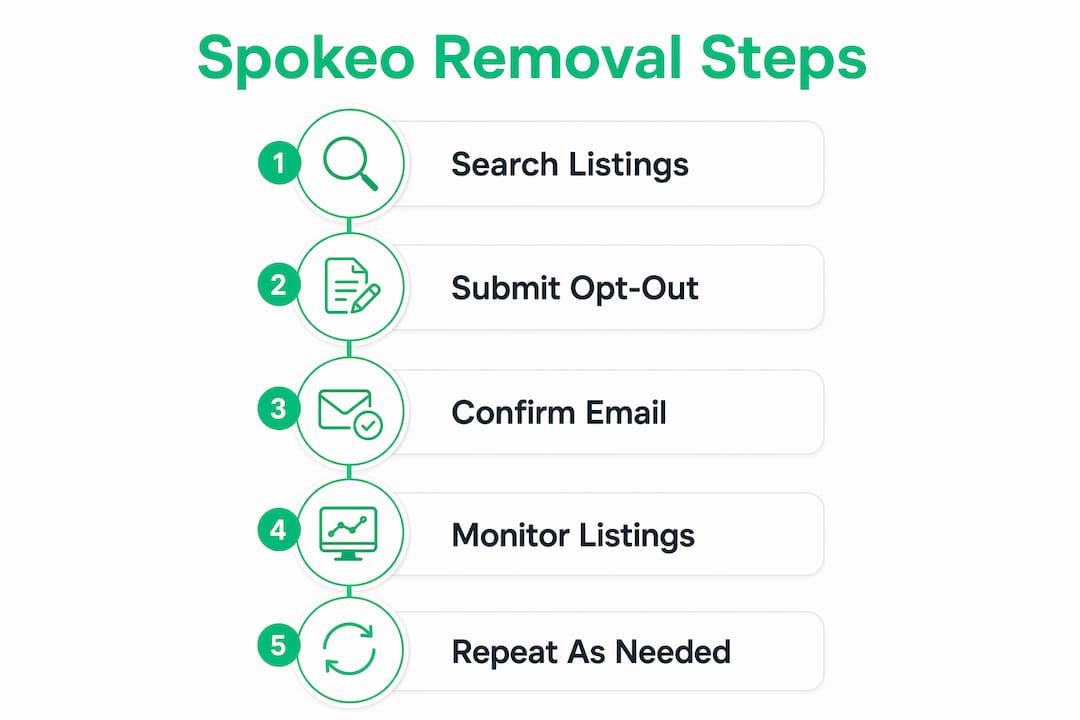
Once you have those URLs, here is the full process:
- Find every listing. Search by name, email address, and phone number separately. A name search returning nothing does not mean Spokeo holds no record on you.
- Copy each profile URL. Grab the full address from the address bar, not a shortened share link.
- Go to spokeo.com/optout. Paste one profile URL into the form, enter a working email address, and complete the CAPTCHA.
- Click the verification link. Spokeo emails a confirmation; the removal request is not processed until you click it. The link expires after 72 hours.
- Repeat for every listing. Each listing requires its own separate submission because each has a unique URL.
- Verify after 2–3 days. Revisit each saved URL. A successful removal shows "No Results Found."
- Save your confirmations. Screenshot the confirmation page and archive the verification email, with personal details redacted, as proof of removal.
Pro Tip: Open an incognito window when searching Spokeo for your own name. Your browsing history can skew results and cause you to miss listings.
Table of Contents
- Why removal has real limits
- How Spokeo sources and handles your data
- Why ongoing privacy protection matters beyond Spokeo
- A broader privacy and data monetization strategy with Tethra
- Gdcs turns your privacy effort into a privacy asset
- Key Takeaways
Why removal has real limits
Opting out of Spokeo suppresses your listing on their platform. It does not delete the data from its original source. Public records, court filings, and voter rolls remain exactly where they were, and Spokeo can pull from them again.
- Data persists at the source. Public records are exempt from most state privacy laws, so the underlying information stays accessible.
- Listings reappear. Spokeo continuously refreshes its database, and re-listing every three to six months is commonly reported.
- Multiple profiles are the norm. A maiden name, a nickname, or an old address can each generate a separate listing, all requiring individual opt-outs.
- Sister sites are separate. Spokeo operates AnyWho.com, ThatsThem.com, and FreePeopleDirectory.com. Opting out of spokeo.com does not cover those properties automatically.
- Other people-search sites are unaffected. Your data likely appears on dozens of similar platforms, each with its own removal process.
- Monitoring is not optional. A one-time opt-out is a snapshot, not a permanent block. Regular checks are the only way to catch re-listings before they spread.
How Spokeo sources and handles your data
Spokeo aggregates information from public records, social media profiles, and commercial databases. They describe themselves as an aggregator, not the original data owner, and that distinction shapes everything about how their opt-out works.
- They suppress, not delete. Spokeo's opt-out removes your listing from their display. The source data stays intact.
- They claim an industry-leading process. Spokeo's help documentation describes their opt-out as one of the easiest in the data broker industry, emphasizing consumer control within the limits of what an aggregator can actually do.
- Processing takes 24–72 hours. Most confirmed requests resolve within that window, though Google's cached version of your profile can linger for up to two weeks.
- Alternative channels exist. If the web form fails due to a paywall, CAPTCHA errors, or a technical issue, Spokeo provides a phone line at 1 (877) 864-0183 and a direct email at privacy@spokeo.com.
- Formal privacy requests go further. California residents can invoke CCPA deletion rights; EU residents can invoke GDPR. Both carry more legal weight than a standard opt-out.
Why ongoing privacy protection matters beyond Spokeo
Spokeo is one of dozens of data brokers collecting and republishing the same public information. Removing yourself from one platform while ignoring the others leaves most of your exposure intact.
- The broker ecosystem is wide. Removing from Spokeo is one step; dozens of similar sites need individual opt-outs for meaningful privacy coverage.
- Set-it-and-forget-it fails. Privacy experts recommend recurring removal maintenance because data brokers re-scrape public records on a rolling basis.
- Legal rights require persistence. GDPR and CCPA give you formal deletion rights, but exercising them across multiple platforms takes sustained effort.
- Monitoring tools close the gap. Automated scanning across brokers catches re-listings faster than manual checks ever can.
- Documentation protects you. Archiving confirmation emails and redacted screenshots gives you evidence for follow-up disputes or regulatory complaints.
A broader privacy and data monetization strategy with Tethra
Removing yourself from Spokeo is the right first move. Building a system around it is what actually protects you long-term, especially if you are also monetizing your personal data and need GDPR compliance baked in.
- Scan broadly with Leak Sweep. Gdcs's Leak Sweep tool scans multiple data brokers simultaneously for exposed personal information, surfacing listings you would never find manually.
- Generate legal removal letters automatically. Rather than drafting opt-out requests by hand for each broker, Gdcs produces compliant removal letters that carry legal weight under GDPR and CCPA frameworks.
- Monetize data on your own terms. Gdcs's Multiplier feature lets you earn royalties from your data by connecting brokers to your consent-backed information, rather than letting brokers profit from it without your knowledge.
- Use Oracle for rare data insights. The Oracle feature rewards you for providing high-value data points that enterprise buyers actively seek.
- Maintain a GDPR-compliant data vault. Gdcs centralizes your data licensing permissions so you control exactly what gets shared, with whom, and under what conditions.
- Set a re-check cycle every few months. Re-listing is predictable. Build a calendar reminder to resubmit opt-outs and run a fresh Leak Sweep scan on that schedule.
- Keep evidence of every removal. Archive confirmation emails with personal details redacted. If a listing reappears and you need to escalate to a regulator, that paper trail is what makes your complaint stick.
Pro Tip: Use a secondary email address when submitting opt-out forms to data brokers. Some platforms add the address you submit to marketing lists, which defeats part of the purpose.
Gdcs turns your privacy effort into a privacy asset

Most people treat data removal as pure damage control. Gdcs reframes it: your personal data has real market value, and you should be the one capturing it.
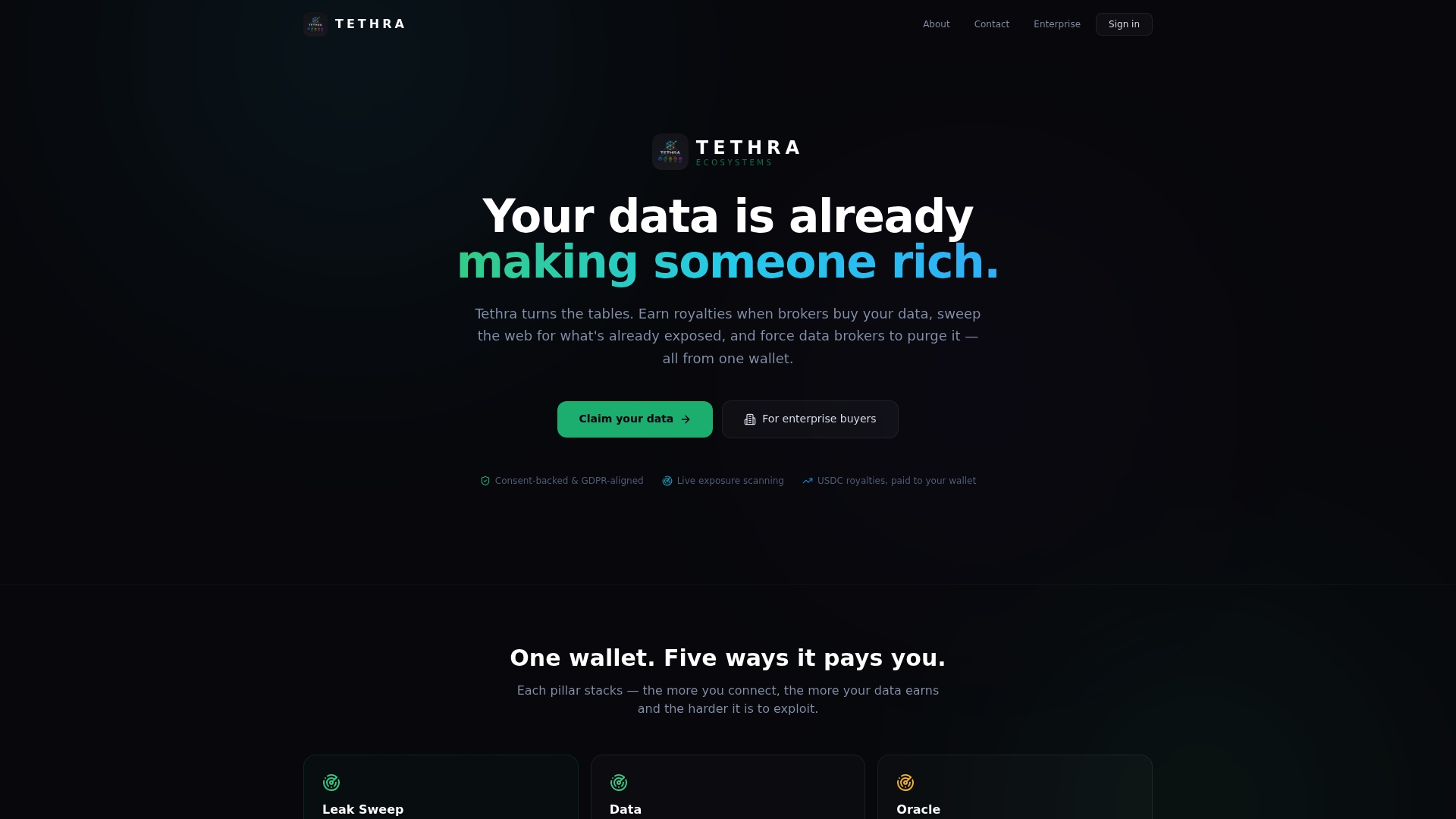
Gdcs is the platform for people who want to remove exposed data and earn from the data they choose to share. Where a standard opt-out process stops at suppression, Gdcs's data broker tools go further: scanning brokers for exposure, generating legal removal requests, and routing your consent-backed data to enterprise buyers who pay royalties for it. The Leak Sweep handles the detection. The wallet handles the earnings. You set the permissions. If you are ready to stop leaving your data unprotected and uncompensated, start with Gdcs and run your first Leak Sweep scan today.
Key Takeaways
Removing yourself from Spokeo requires a separate opt-out submission for every listing you find, followed by ongoing monitoring because re-listing within three to six months is common.
| Point | Details |
|---|---|
| One URL per submission | Each Spokeo listing has a unique URL and must be opted out individually. |
| Verification is mandatory | The removal request is not processed until you click the email confirmation link. |
| Data persists at the source | Opting out suppresses the Spokeo display; original public records remain unchanged. |
| Re-listing is predictable | Spokeo refreshes from public sources regularly; check every 3 months and resubmit. |
| Gdcs extends the effort | Gdcs's Leak Sweep scans brokers broadly and generates legal removal letters, while its wallet lets you earn royalties from data you choose to share. |